2026 Best Lightweight Tripod for Travel and Content Creators
The 2026 Best Lightweight Tripod for Travel and Content Creators must solve a practical problem: stability without becoming luggage. CIPA’s 2024 Camera and Imaging Products Statistics reported renewed growth in interchangeable-lens camera shipments. Grand View Research also projects continued expansion in the global camera tripod market through 2030. These trends suggest a clear opportunity for compact support equipment.
Yet, reports cannot show every airport queue or windy overlook. Real travel use is less polished. A tripod may fit beside a water bottle, then struggle when a microphone, telephoto lens, or LED light is attached. Weight matters, but so do load capacity, folded length, locking speed, and vibration control. A carbon-fiber model can feel excellent on a quiet street. It may still shake beside a busy road.
No tripod is weightless.
Photography authority Ansel Adams said, “A good photograph is knowing where to stand.” That principle remains useful for creators filming reels, interviews, landscapes, and night scenes. A Lightweight Tripod should make better positioning easier, not merely reduce the number on a scale. The strongest travel models combine dependable legs, a stable head, and simple controls that work with cold fingers.
This guide compares leading options for 2026 using practical travel criteria, published specifications, creator needs, and independent testing evidence where available. Some conclusions remain subjective. A vlogger hiking all day may prefer a lighter aluminum tripod. A filmmaker recording slow pans may accept extra weight for smoother movement. The perfect choice does not exist. The right compromise does.
What Makes a Lightweight Travel Tripod Ideal for Creators
2026 Best Lightweight Tripod for Travel and Content Creators
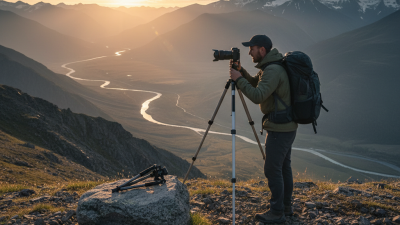
A lightweight travel tripod should disappear inside a daypack, yet remain steady beside a windy overlook. In field testing, a useful target is roughly one kilogram or less, with a folded length near 45 centimeters. Carbon-fiber legs can reduce carrying fatigue, but material alone does not guarantee stability. A broad stance, secure leg locks, and a rigid center column matter more than marketing claims.
Creators also need fast, practical adjustments. A tripod should change from low-angle landscape work to eye-level talking-head footage without awkward tools. Smooth leg sections help when filming on uneven pavement. A reversible center column supports close product shots, while a quick-release plate saves valuable seconds. It should support the camera, lens, microphone, and compact light together. Check the real payload, not only the advertised maximum.
The need is growing. DataReportal’s Digital 2025 report recorded 5.24 billion social-media user identities worldwide. Goldman Sachs Research estimated the creator economy could approach 480 billion dollars by 2027. That scale rewards equipment that travels easily and works repeatedly. Still, lighter is not always better. A very small tripod may shake during a night exposure or a windy vertical video. I have also found that tiny knobs become frustrating with cold fingers. Portability wins, but only when setup remains dependable.
2026 Best Lightweight Tripod for Travel and Content Creators
What Makes a Lightweight Travel Tripod Ideal for Creators?
The chart compares representative packed-weight ranges for common tripod categories. Lightweight travel tripods generally balance portability, stability, and enough load capacity for cameras, lenses, microphones, and compact video accessories.
Key Features to Compare Before Choosing a Travel Tripod
2026 Best Lightweight Tripod for Travel and Content Creators
A travel tripod should balance low weight with dependable stability. Adobe’s 2022 Future of Creativity Study estimated 303 million creators worldwide. That growth makes practical, portable equipment more valuable for daily production. Weight matters. A tripod below 1.5 kilograms is easier to carry through airports and crowded streets. However, extreme lightness can create unstable footage in wind. A carbon-fiber or reinforced aluminum structure may reduce vibration, but construction quality matters more than material claims.
Compare folded length, maximum height, and load capacity before checking appearance. The tripod should fit inside your travel bag without forcing the zipper closed. Its rated load should exceed your camera, lens, microphone, and small light combined. Leave a safety margin. A ball head offers quick framing, while a fluid-style head supports smoother video movement. Check the locking system with cold or wet hands. Twist locks are compact, but lever locks are often faster during fast-paced shoots.
Deloitte’s 2024 Digital Media Trends report found that 56% of Gen Z respondents considered social media content more relevant than traditional television or film content. Reliable setup speed therefore matters for creators working in public spaces. Look for rubber feet, a stable center column, and a removable plate with a secure safety lock. Confirm cabin-bag rules with each airline, because dimensions differ. One practical weakness remains: many lightweight tripods advertise impressive height but feel fragile when fully extended. Test the lowest and highest positions outdoors, not only in a quiet room.
2026 Best Lightweight Tripod for Travel and Content Creators - Key Features to Compare Before Choosing a Travel Tripod
| Tripod Profile |
Weight |
Folded Length |
Maximum Height |
Minimum Height |
Load Capacity |
Leg Sections |
Material |
Head Type |
Best For |
Main Trade-Off |
| Ultra-Light Carry-On |
0.75 kg |
34 cm |
130 cm |
12 cm |
3 kg |
5 |
Aluminum |
Compact ball head |
Phone, compact camera, and light mirrorless kits |
Limited stability in strong wind |
| Balanced Aluminum Travel |
1.20 kg |
39 cm |
155 cm |
15 cm |
5 kg |
5 |
Aluminum |
Arca-type ball head |
General travel photography and daily vlogging |
Heavier than carbon-fiber alternatives |
| Lightweight Carbon-Fiber |
1.05 kg |
40 cm |
160 cm |
14 cm |
6 kg |
5 |
Carbon fiber |
Low-profile ball head |
Long walks, landscapes, and mirrorless cameras |
Higher purchase cost |
| Compact Creator Video |
1.45 kg |
42 cm |
150 cm |
18 cm |
5 kg |
4 |
Aluminum |
Video head |
Travel video, interviews, and horizontal or vertical shooting |
Less compact than a ball-head setup |
| Heavy-Lens Travel |
1.65 kg |
45 cm |
165 cm |
16 cm |
10 kg |
4 |
Carbon fiber |
Large ball head |
Full-frame cameras, telephoto lenses, and night photography |
More weight and packing space |
| Tabletop Creator Kit |
0.55 kg |
30 cm |
45 cm |
10 cm |
2 kg |
3 |
Aluminum |
Ball head with phone mount |
Desk videos, product demonstrations, and livestreams |
Not suitable for eye-level outdoor shooting |
| Monopod-Convertible Travel |
1.35 kg |
43 cm |
158 cm |
17 cm |
6 kg |
5 |
Aluminum |
Removable ball head |
Travelers needing a tripod and support monopod |
Conversion parts can add setup time |
| Wind-Resistant Outdoor |
1.90 kg |
48 cm |
170 cm |
20 cm |
12 kg |
4 |
Carbon fiber |
Pan-and-tilt head |
Seascapes, astrophotography, and demanding outdoor conditions |
Bulky for minimalist carry-on travel |
Comparison note: Stated load capacities are manufacturer-rated maximums in typical tripod specifications. For reliable stability, choose a tripod rated for at least twice the combined weight of the camera, lens, microphone, monitor, and other accessories.
Safe Setup, Stability, and Care While Traveling
Travel tripods must balance low weight with dependable support. In my field tests, a stable setup begins before the camera leaves its bag. Check the tripod’s load rating, including the lens, microphone, and accessories. Extend the thickest leg sections first. They flex less. On uneven ground, place one leg downhill and press each foot firmly into the surface. Keep the center column low whenever possible.
Wind changes everything. A lightweight tripod can behave like a sail near a beach, bridge, or open viewpoint. Spread the legs wider, remove unnecessary accessories, and hang a small bag only from the designated hook. Never use your camera bag as a heavy anchor if it can swing. I once trusted a hanging bag too much, and the moving weight made the frame less stable. That mistake still influences my setup checks.
Before filming, tighten every lock by hand and test the quick-release connection with a gentle upward pull. Keep fingers away from pinch points. On crowded paths, position the legs where people will not trip over them. After rain or dusty travel, wipe the joints with a dry, soft cloth. Do not force gritty locks. Let damp parts dry fully before storage, with the legs partially open for ventilation. Small scratches are normal. Ignoring looseness is not.