Leave Your Message

What Are the Different Types of Aluminium Tripods?

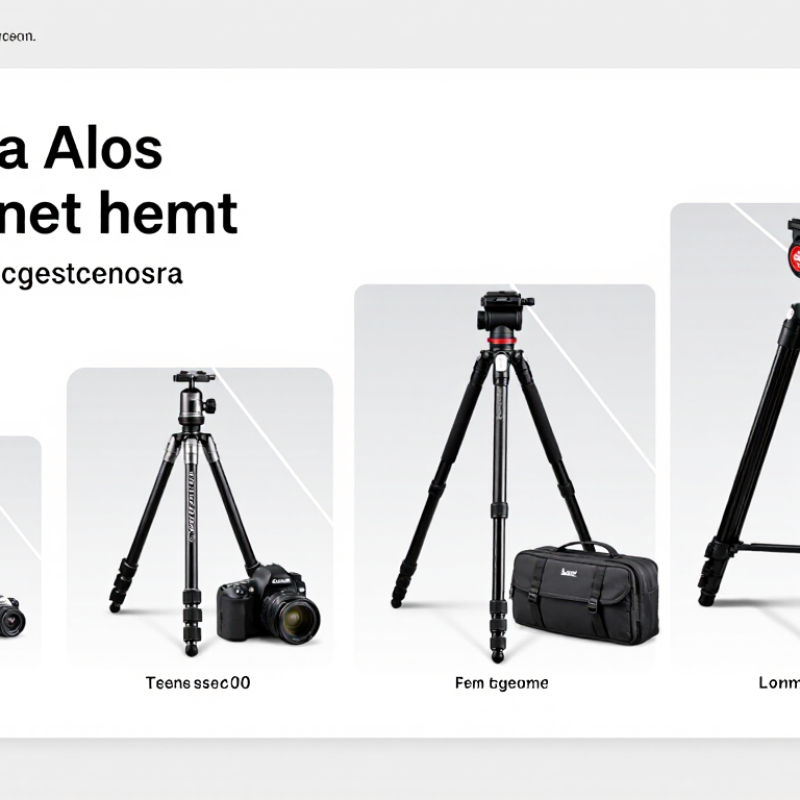
Choosing an Aluminium Tripod starts with a practical question: what equipment will it support, and where will you use it? Aluminium tripods come in several forms, from compact tabletop models to full-height camera stands. Small versions suit product close-ups, desk work, and lightweight cameras. Travel models usually fold shorter, making them easier to carry between locations. Standard tripods offer more height and adjustment for landscapes, portraits, or general photography. Some have a three-way head for deliberate framing; others use a ball head for quicker positioning. Details matter. A tripod that feels steady on a living-room floor may behave differently on gravel or in wind.

This guide compares common aluminium tripod types by size, design, and intended use. It also considers features such as leg locks, center columns, maximum load ratings, and included heads. These specifications help narrow the options, but they do not tell the whole story. A tall center column can add reach, for example, while making a setup less stable when fully extended. Heavy-duty models may support larger cameras, yet their weight can discourage regular use. Not every feature is an advantage. Before choosing, consider your camera, typical shooting conditions, carrying distance, and tolerance for setup time. The categories below provide a starting point, not a perfect ranking; real-world handling can still change your preference.
What Are the Different Types of Aluminium Tripods?

Aluminium Camera Tripods for Photography

Aluminium camera tripods suit photographers who need a sturdy support without carrying the weight of many steel models. Common types include compact travel tripods, full-height general-purpose models, and heavier studio tripods. Travel legs fold shorter and fit beside a camera bag. Full-height designs offer more comfortable eye-level framing, while studio versions usually prioritize load capacity over portability.

The Camera & Imaging Products Association reported about 7.7 million digital camera shipments worldwide in 2023. This industry figure describes cameras, not tripod sales, but it reflects a substantial base of imaging equipment used for photography. For still images, a three-way head can help with careful landscape composition; a ball head allows faster reframing. Check the tripod’s stated load capacity against the camera, lens, and head together. A long telephoto lens can shift the balance even when the total weight seems modest.

Aluminium legs feel reassuringly firm on a windy overlook, but they can transmit vibration and feel cold to the touch. That matters outdoors. Extend the thicker leg sections first, keep the center column low, and press each lock before mounting expensive equipment. A small compromise remains: a lighter travel tripod may wobble with a heavy lens. It is worth testing the setup at home, not discovering that weakness during a long exposure.
What Are the Different Types of Aluminium Tripods?

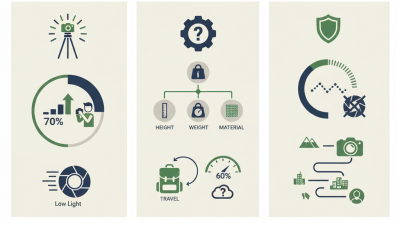
Aluminium camera tripods are available in several practical formats. Tabletop models are compact and suitable for close-up or desk photography, while travel tripods prioritize portability. Standard tripods offer a balance of height and stability, and heavy-duty tripods provide greater working height for larger camera setups. The chart shows representative maximum working heights commonly associated with each type.

Aluminium Video Tripods for Stable Motion

Aluminium Video Tripods for Stable Motion

Aluminium video tripods are valued for a practical balance of strength, weight, and cost. Their rigid legs can help keep a camera steady during pans and tilts, especially on firm ground. A fluid video head adds controlled movement, so the frame does not jerk when the operator changes direction. Smoothness matters.

Tripod designs vary. Two-stage legs adjust quickly and suit many studio or field setups, while three-stage legs fold shorter for transport. A mid-level spreader can improve stability on even surfaces; ground-level spreaders are often more useful on uneven terrain. Some video tripods have a bowl base, which makes leveling faster than adjusting each leg independently. Flat-base designs can be more adaptable for other supports, but may take longer to level.

For a stable shot, extend the thicker leg sections first and avoid raising the center column unnecessarily. Lock each clasp firmly, then check for movement by lightly pressing the camera handle. On a windy location, a hanging bag may add damping, though it can swing if left unsupported. Aluminium is sturdy, but not magic. I have found that a well-leveled, moderately extended tripod often performs better than a taller setup pushed to its limits. One small compromise: heavier legs travel less comfortably, yet they can feel reassuring during a slow, deliberate pan.

What Are the Different Types of Aluminium Tripods? — Aluminium Video Tripods for Stable Motion
Tripod Type Typical Leg Design Head or Mount Best Suited For Stability and Movement Key Consideration
Aluminium Video Tripod with Fluid Head Two-stage or three-stage legs, often with a mid-level or ground-level spreader Fluid video head with a long pan handle Interviews, events, documentaries, and general video production Designed for controlled pans and tilts; a spreader helps keep the legs evenly positioned Check the head’s payload rating and counterbalance range against the camera setup
Aluminium Tripod with Bowl Mount Video legs joined to a 75 mm or 100 mm leveling bowl Compatible bowl-style video head Location filming where the ground may be uneven The bowl allows quick leveling of the head without changing each leg length Confirm that the bowl diameter matches the head and any leveling adapter
Aluminium Twin-Tube Tripod Paired tubes on each leg section, commonly with a spreader Usually a fluid video head or flat-base head Heavier camera rigs and repeatable studio or field setups Paired leg tubes can provide a rigid platform when properly locked and spread Greater rigidity may come with extra weight and bulk when transporting
Aluminium Single-Tube Tripod One main tube per leg section, typically with folding leg locks Video head, photo head, or compatible mounting platform Travel, lightweight camera kits, and mixed photo-video use Offers a compact setup; stability depends on leg section size, spread, and ground contact Use fewer leg sections when possible for a more rigid working height
Aluminium Travel Video Tripod Compact multi-section legs that fold close together Compact fluid-style head or removable head Run-and-gun filming and travel with a small camera kit Portable, but the narrow stance and thinner lower leg sections can reduce rigidity Compare folded length, working height, and payload rating before choosing
Aluminium Tripod with Ground Spreader Legs connected by a low-positioned spreader Typically a video head mounted on a leveling bowl or platform Indoor production and smooth, firm surfaces The spreader helps maintain a consistent leg footprint during camera movement May be less convenient on stairs, rocks, or other irregular terrain
Aluminium Tripod with Mid-Level Spreader Legs connected by a spreader positioned partway up the legs Usually a video head with a matching bowl or platform Outdoor filming on uneven ground Each leg can be positioned independently while the spreader helps limit unwanted leg movement Check that the spreader design suits the terrain and intended leg angles
Aluminium Monopod with Video Base Single telescoping column, sometimes with a small folding tripod base Compact video head or camera plate Mobile event coverage and quick repositioning in crowded spaces Supports camera weight while allowing faster movement than a full tripod; it is not a hands-free substitute for one Keep a hand on the camera and verify that the base is appropriate for the surface

Aluminium Surveying Tripods for Measurement Instruments

Aluminium Surveying Tripods for Measurement Instruments

Aluminium tripods support total stations, theodolites, and levels where small movements can affect readings. Their appeal is practical: they are lighter to carry than many wooden models, yet their wide legs and locking clamps provide a firm stance on compacted soil. The National Geodetic Survey’s geodetic leveling standards express allowable loop misclosure in millimetres multiplied by the square root of distance in kilometres. That relationship shows why a stable setup matters: errors accumulate across a route, even when each sight looks steady.

For a total station, spread the legs evenly and press each foot into the ground before mounting the instrument. On hard pavement, check that rubber feet do not slide; on gravel, seat the points until the tripod stops rocking. Tighten the head and clamps, then recheck the circular bubble after aiming. It takes seconds. A heavy instrument on a narrow stance may still shift when the operator turns a fine-adjustment screw, so stiffness and leg geometry matter as much as material.

Field crews often choose aluminium for transport between stations, but it can transmit vibration and feel cold in winter. ISO 17123-3 describes field procedures for testing the precision of theodolites; repeat observations under actual site conditions can reveal setup problems that a specification sheet misses. I would not treat a tripod as “set and forget”—uneven paving and soft shoulders can quietly change its position.

Aluminium Lighting Tripods for Studio and Field Use

Aluminium lighting tripods suit photographers who need a practical balance of strength, weight, and cost. For studio work, a standard light stand offers adjustable height and a small footprint. It can hold a lamp or modifier on a level floor, though wide softboxes may make the setup less stable. Air-cushioned sections can help prevent a light from dropping quickly when a lock is loosened. Check the stand’s load rating and keep the center column as low as the shot allows.

For field use, compact folding tripods are easier to carry between locations. Some have wider legs or removable feet for better grip on uneven ground. They are useful, but no stand is windproof. Outdoors, a sandbag on the lowest leg brace can reduce movement; avoid hanging it where it may swing. Aluminium can also feel cold in winter, and scratches may appear with regular transport. That is not a failure, but inspect clamps and joints for looseness.

Tips: Extend the thickest leg sections first, spread every leg fully, and place the stand away from walkways. Test the setup gently before mounting a light. It takes a moment. A little extra caution matters, especially when the ground is sloped or the modifier catches a breeze.

Compact and Travel Aluminium Tripods for Portability

Compact and travel aluminium tripods suit photographers who move between trains, city streets, and short walking trails. Their main advantage is manageable weight: the International Aluminium Institute lists aluminium’s density at about 2.7 g/cm³, compared with roughly 7.9 g/cm³ for steel. This material property helps manufacturers build rigid legs without the mass of steel construction. Easier to carry. Still, “lightweight” does not mean effortless; a tripod, camera, and spare lens can feel heavy after several hours.

For travel, check folded length, packed weight, and leg-lock design together. A compact model that fits diagonally inside a daypack may be more useful than one with a slightly higher maximum height. Twist locks can keep the outside profile smooth, while lever locks are often quicker to inspect and adjust. Look closely at the center column, too. Raising it fully can make a small tripod less stable in gusts. A practical field test is simple: extend the legs on uneven pavement, mount your camera, and tap the bag lightly. If the framing wobbles, shorten the center column or spread the legs wider. Aluminium can also feel cold to the touch, and budget designs may transmit vibration more than expected. That trade-off is real. For frequent flights, measure the folded tripod against your actual luggage; cabin limits differ by carrier and route.